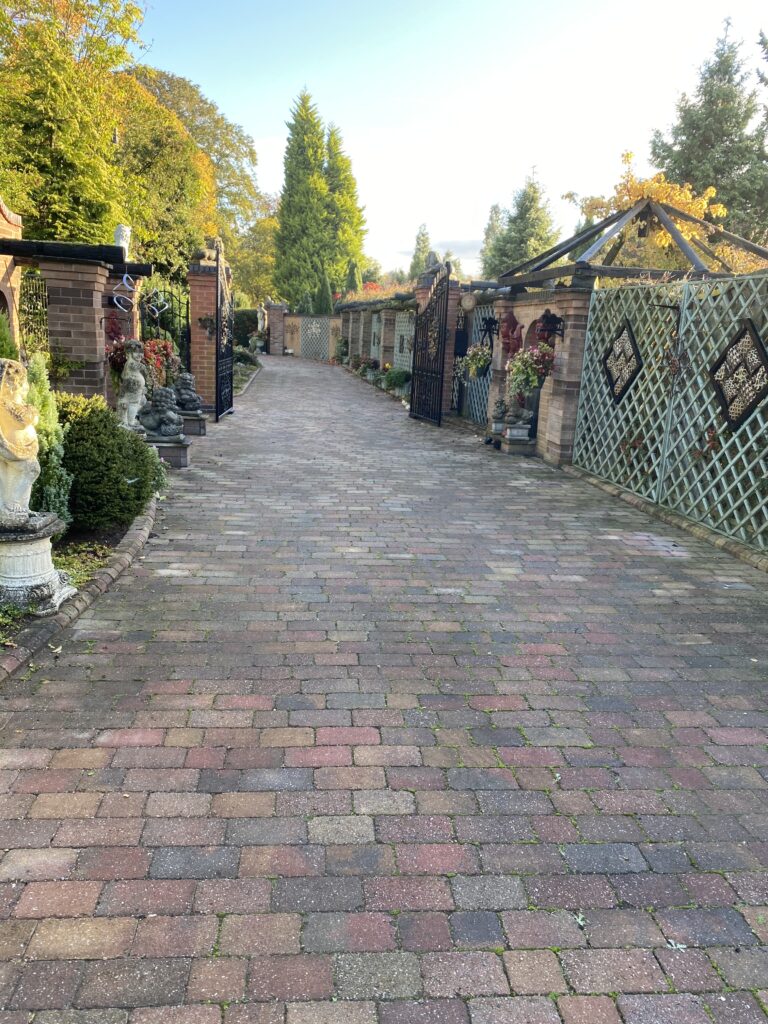
If you have ever had your driveway pressure washed and watched the colour come back beautifully — only to see weeds and moss return within a few months — there is a good chance the joints were never properly re-sanded afterwards. Re-sanding block paving is the single most important step in making a driveway clean last.
What the joint sand does
The sand between block paving stones is not decorative. It locks the blocks together, distributes the load when a vehicle drives over them, and physically blocks the path for weed seeds and moss spores. Without a full joint of fresh sand, the blocks rock slightly under load and moss spores find easy purchase in the gaps.
Why a clean removes the old sand
Any decent pressure wash will lift out most of the old joint sand — and that is actually a good thing. The old sand is contaminated with moss spores, weed roots, dirt and biological matter. Leaving it in place would mean weeds and moss return very quickly. The pressure wash gives you a fresh start; the re-sand finishes the job.
Kiln-dried sand and why it matters
We use kiln-dried sand for re-sanding. The drying process drives all the moisture out so the sand pours easily and falls right down to the bottom of every joint. Damp sand bridges across the top of joints and never settles properly, which leaves voids underneath where weeds can establish.
The Jet Waves re-sand
After we finish the pressure wash, we let the surface dry, then brush kiln-dried sand across the whole drive in a diagonal pattern so it falls into every joint. We sweep up the surplus and the drive is ready to use immediately. It is included in every block-paving driveway clean we quote.
Get in touch
For a free quote on a block-paving clean and re-sand anywhere in Leicestershire, call 07732 187000.